


The Life of Disabled Australians: Understanding Their Experiences
- Jonathan Shar

- Jan 5
- 3 min read
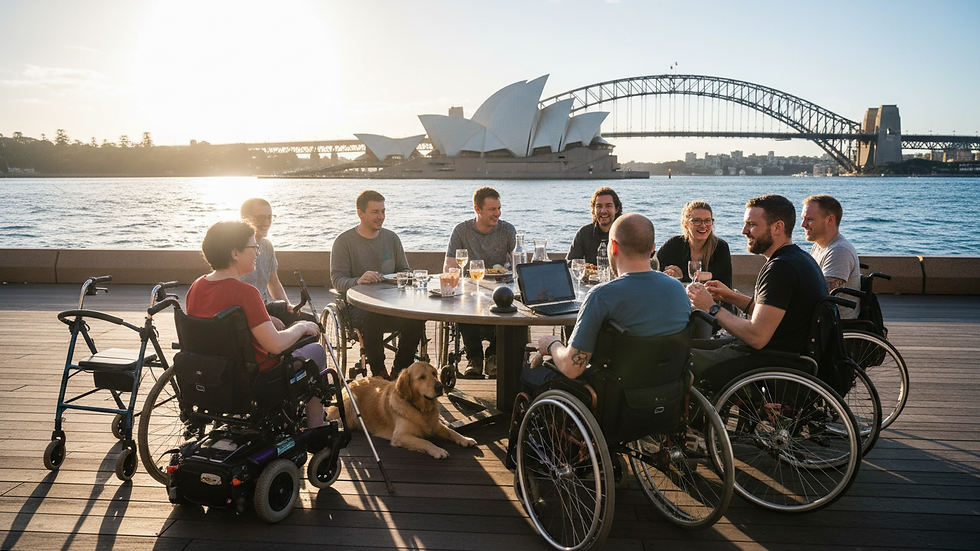
The experiences of disabled Australians are complex and varied, reflecting a broad spectrum of needs, aspirations, and challenges. It is essential to recognize that people with disabilities are not a monolithic group defined solely by their impairments or by their interactions with welfare systems such as the National Disability Insurance Scheme (NDIS). Instead, they are innovators, contributors, and active participants in society who continuously challenge stereotypes and barriers. This article explores the multifaceted life of disabled Australians, highlighting the social, economic, and cultural dimensions that shape their everyday realities.
The Life of Disabled Australians: Diversity and Inclusion
Disability in Australia encompasses a wide range of conditions, including physical, sensory, intellectual, and psychosocial disabilities. Each individual’s experience is unique, influenced by factors such as age, location, cultural background, and personal circumstances. The diversity within this community means that policies and services must be flexible and responsive to varied needs.
Inclusion is a critical goal. It involves more than just physical access to buildings or services; it requires societal attitudes to evolve, enabling full participation in education, employment, and community life. For example, accessible public transport and workplaces are necessary but insufficient without inclusive hiring practices and supportive workplace cultures.
Practical recommendations for fostering inclusion include:
Implementing universal design principles in public infrastructure.
Providing tailored employment support programs.
Promoting disability awareness training in schools and workplaces.
Encouraging media representation that reflects the diversity of disabled Australians.
Such measures help dismantle barriers and create environments where disabled individuals can thrive.

Barriers Faced by Disabled Australians
Despite progress, many disabled Australians encounter significant obstacles. Physical barriers, such as inaccessible buildings and transport, remain prevalent. Social barriers, including stigma and discrimination, often limit opportunities and affect mental health. Economic barriers are also critical, with disabled people experiencing higher rates of unemployment and poverty compared to the general population.
For instance, employment statistics reveal that disabled Australians are less likely to be employed and more likely to work part-time or in insecure jobs. This economic disparity is compounded by additional costs related to disability, such as medical expenses and assistive technologies.
Addressing these barriers requires coordinated efforts across government, business, and community sectors. Policies must prioritize accessibility, anti-discrimination enforcement, and economic support tailored to individual circumstances.
The Role of Innovation and Advocacy
When faced with barriers and discrimination, the disability community often leads innovation towards inclusion. Disabled Australians have been at the forefront of developing assistive technologies, accessible design, and advocacy strategies that challenge societal norms.
For example, community-led initiatives have created peer support networks and inclusive cultural events that celebrate disability as a form of diversity rather than deficit. Advocacy groups work tirelessly to influence policy, ensuring that the voices of disabled people are central to decision-making processes.
The National Disability Insurance Scheme (NDIS) has been a significant development, providing individualized funding to support independence and choice. However, it is important to remember that disabled Australians are more than just NDIS participants or welfare recipients; they are creators, leaders, and innovators.

Social Participation and Community Engagement
Social participation is a vital aspect of well-being for disabled Australians. Engagement in community activities, education, and recreation contributes to a sense of belonging and purpose. However, social isolation remains a concern, particularly for those living in rural or remote areas where services and opportunities may be limited.
Community organisations play a crucial role in bridging gaps by providing accessible programs and fostering inclusive environments. Events that promote disability awareness and celebrate achievements help shift public perceptions and reduce stigma.
To enhance social participation, consider the following actions:
Increase funding for community-based disability programs.
Develop accessible digital platforms for social connection.
Encourage partnerships between disability organisations and mainstream community groups.
Support inclusive education initiatives from early childhood through adulthood.
These strategies help build stronger, more connected communities where everyone can contribute.
Moving Towards a Fairer Society
Creating a fairer Australian society for people with disabilities requires ongoing commitment and collaboration. It involves raising awareness through media, fostering community connections, and advocating for rights and opportunities. Organisations like Australian Disability Ltd are instrumental in this process, working to empower individuals and shift public perception towards a more inclusive understanding of disability.
You can learn more about the efforts and resources available by visiting disabled australia.
Ultimately, the life of disabled Australians is shaped by both challenges and achievements. Recognizing their diversity, supporting their innovation, and removing barriers will enable a society where everyone’s potential is realized.
This overview aims to provide practical insights and encourage continued dialogue and action towards inclusion. By understanding the experiences of disabled Australians, you can contribute to a more equitable and respectful community for all.

Comments