


Accessible and Inclusive Community Groups in Australia
- Jonathan Shar

- Jan 19
- 4 min read
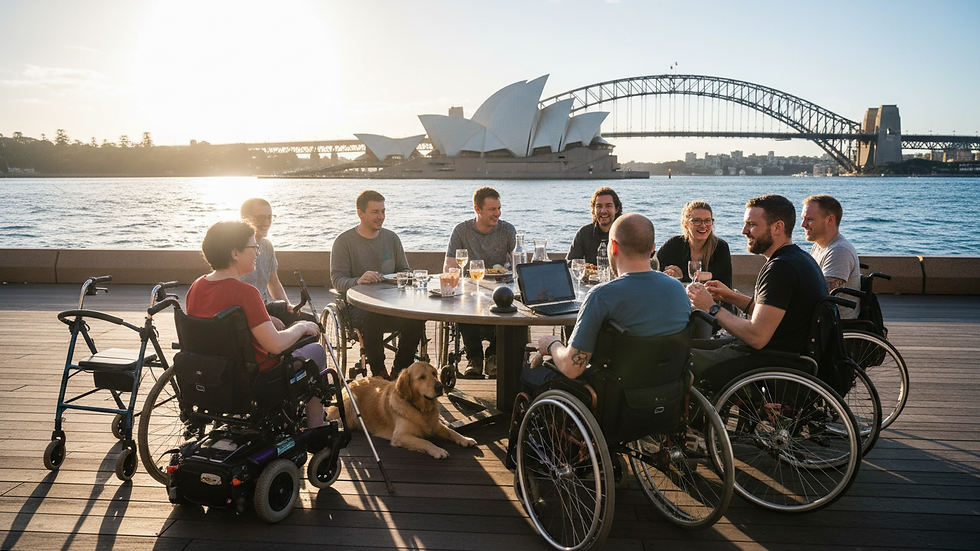
Community groups play a vital role in fostering social connection, support, and empowerment. For people with disabilities, accessible and inclusive community groups are essential in breaking down barriers and promoting participation in all aspects of life. These groups not only provide opportunities for social engagement but also serve as platforms for advocacy, innovation, and cultural change. This article explores the landscape of accessible community groups in Australia, highlighting their importance, types, and how you can engage with them effectively.
Understanding Inclusive Community Groups in Australia
Inclusive community groups are designed to welcome and accommodate people of all abilities, ensuring that everyone can participate fully and equally. In Australia, these groups are increasingly recognised as critical to achieving social inclusion and equity for people with disabilities. They often operate under principles of universal design, accessibility, and respect for diversity.
These groups vary widely in focus and structure. Some are disability-specific, created by and for people with disabilities, while others are mainstream groups that have adapted their practices to be more inclusive. The common thread is the commitment to removing physical, social, and attitudinal barriers that limit participation.
Key Features of Inclusive Community Groups
Accessibility: Physical access to venues, communication supports such as Auslan interpreters or easy-read materials, and flexible meeting formats.
Representation: Leadership and membership that reflect the diversity of the disability community.
Supportive Environment: Policies and practices that promote respect, safety, and empowerment.
Collaboration: Partnerships with disability organisations, local councils, and service providers to enhance resources and outreach.

Types of Accessible Community Groups in Australia
Australia hosts a broad spectrum of community groups that cater to different interests, needs, and cultural backgrounds. Understanding the types available can help you find or create a group that suits your preferences and goals.
Disability-Specific Groups
These groups focus exclusively on people with disabilities and often address specific conditions or shared experiences. Examples include:
Peer Support Groups: Providing emotional support, information sharing, and social connection.
Advocacy Groups: Working to influence policy and public attitudes.
Activity-Based Groups: Organising accessible sports, arts, or hobby activities.
Mainstream Groups with Inclusive Practices
Many mainstream community groups have adopted inclusive practices to welcome members with disabilities. These might include:
Local sports clubs with adapted equipment and coaching.
Cultural and arts organisations offering accessible workshops.
Faith-based groups providing inclusive worship and social activities.
Online and Hybrid Groups
The rise of digital technology has expanded access to community groups through online platforms. These groups can be particularly valuable for people with mobility challenges or those living in remote areas.
Virtual support groups via video conferencing.
Social media communities focused on shared interests or advocacy.
Hybrid models combining in-person and online participation.
How to Engage with Accessible Community Groups
Engagement with community groups can be transformative, but it requires awareness of your needs and the group’s accessibility. Here are practical steps to help you connect effectively:
Identify Your Interests and Needs: Consider what type of group aligns with your hobbies, support needs, or advocacy goals.
Research Accessibility: Check if the group provides accessible venues, communication supports, and inclusive policies.
Reach Out: Contact group organisers to ask about accommodations and express your interest.
Attend a Meeting or Event: Experience the group environment firsthand to assess fit.
Provide Feedback: Share your experiences to help the group improve accessibility and inclusivity.
Tips for Group Organisers to Enhance Accessibility
Conduct accessibility audits of venues and materials.
Offer multiple communication formats.
Train staff and volunteers on disability awareness.
Foster a culture of respect and inclusion.

The Role of Innovation in Disability Inclusion
People with disabilities are not merely recipients of services; they are innovators who challenge stereotypes and create new possibilities. When barriers and discrimination are encountered, the disability community often leads the way in developing solutions that benefit everyone.
For example, accessible technology such as screen readers, voice recognition software, and mobility aids have revolutionised participation. Community groups frequently pilot and share these innovations, fostering a culture of continuous improvement.
Moreover, inclusive community groups serve as incubators for social innovation by:
Encouraging diverse leadership and decision-making.
Promoting inclusive design in programs and events.
Collaborating with researchers and policymakers to influence systemic change.
This dynamic approach helps shift public perception towards a more inclusive understanding of disability, aligning with the goals of organisations like Australian Disability Ltd, which advocate for a fairer society.
Building a Fairer Society Through Community Participation
Accessible community groups are foundational to building a society where people with disabilities can contribute fully and equally. Participation in these groups enhances social capital, reduces isolation, and empowers individuals to advocate for their rights.
To support this vision, it is essential to:
Promote awareness of the diversity within the disability community.
Challenge stereotypes and discriminatory attitudes.
Invest in accessible infrastructure and resources.
Encourage collaboration between disability organisations, government, and the wider community.
By engaging with accessible community groups, you become part of a movement that not only supports individual well-being but also drives societal transformation.
Accessible community groups in Australia represent more than just social spaces; they are catalysts for inclusion, innovation, and empowerment. Whether you are seeking connection, support, or a platform for advocacy, these groups offer valuable opportunities to participate in shaping a more equitable society. Embracing accessibility and inclusivity benefits everyone, creating communities where diversity is celebrated and all members can thrive.

Comments